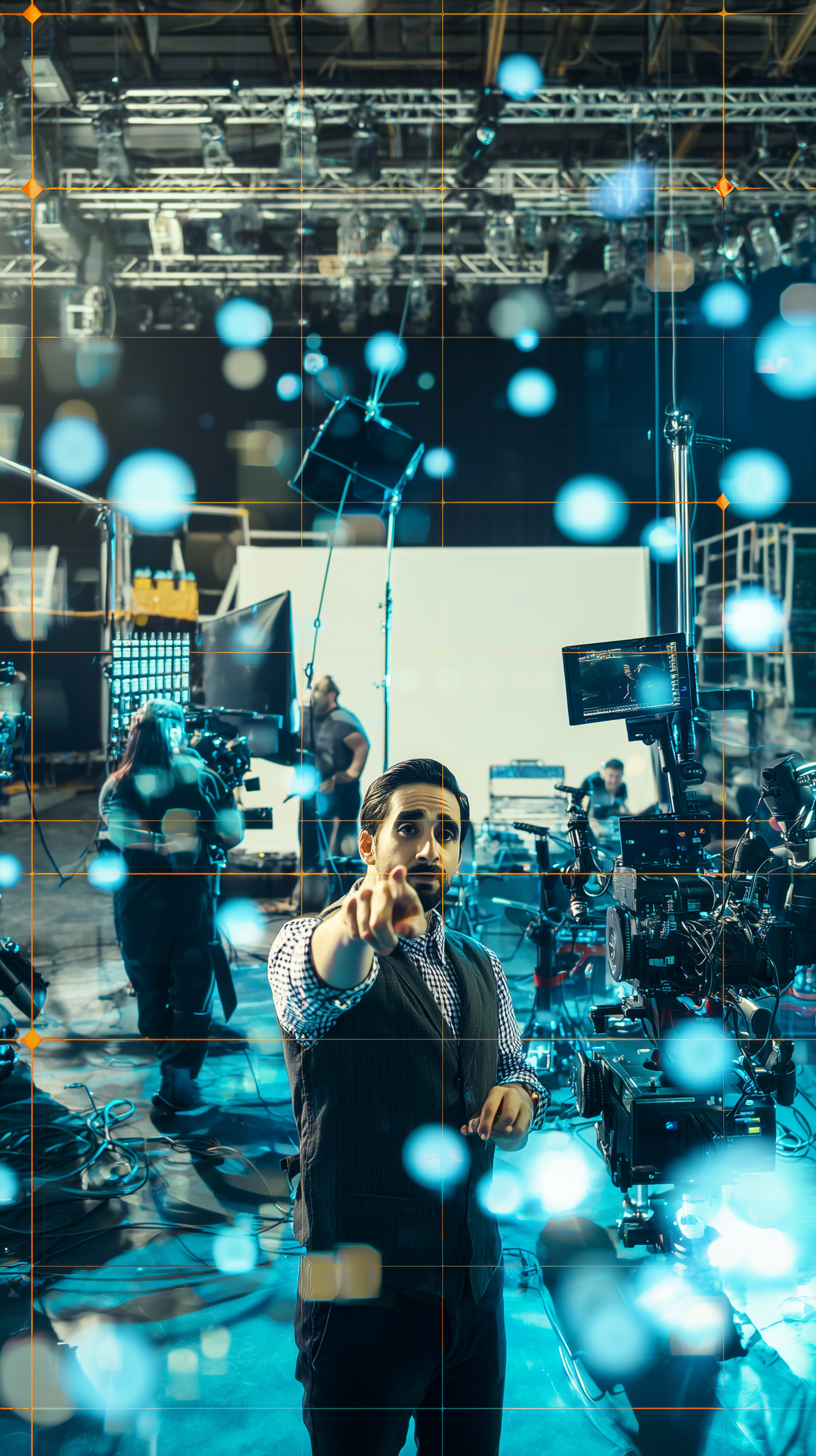
The job has changed. A multimedia producer is no longer just the person who keeps the calendar, manages approvals, and pushes files from one team to another. In 2026, that role sits much closer to the center of the project. The producer now has to connect creative direction, technical workflows, platform logic, AI-assisted production, and audience expectations in one moving system. That shift reflects a wider labor trend: the World Economic Forum’s Future of Jobs Report 2025 says technological skills are rising faster in importance than any other skill category, while creative thinking, resilience, flexibility, and lifelong learning are also climbing.
The first skill is still the most basic one, but it now has a wider scope: systems thinking. A multimedia project producer has to understand how all parts of the production chain affect one another. A change in story structure can alter editing time. A change in aspect ratio can affect motion design, subtitles, platform exports, and paid distribution. A real-time engine can shorten one stage and complicate another. In other words, the producer has to think in dependencies, not in isolated tasks. This matters even more now because media workflows are becoming more connected, automated, and real-time. Deloitte’s 2026 technology outlook describes SaaS environments as moving toward more intelligent and orchestrated workflow services, which means producers increasingly manage connected systems, not just separate tools.
The second essential skill is technical literacy without pretending to be an engineer. A producer in 2026 does not need to build every pipeline, but does need to understand the logic behind tools used by editors, animators, sound designers, developers, and virtual production teams. That includes real-time engines, cloud collaboration, version control habits, AI-assisted asset generation, and delivery requirements across platforms. Unreal Engine’s own film and television materials now present real-time workflows as part of production, post-production, and virtual production, not as a niche experiment. That changes what a producer needs to know. The producer has to ask better questions earlier, before teams lose time in avoidable rework.
The third skill is AI workflow judgment. This is not the same as “knowing AI.” Many teams now have access to image, video, search, transcription, and ideation tools. Adobe’s recent reports describe generative AI as a major force in creative workflows, while recent media-industry reporting shows companies such as Canal+ integrating generative AI into production and discovery systems. That means the producer now has to decide where AI helps, where it slows the team down, and where it creates legal, editorial, or quality risk. The valuable producer is not the person who says yes to every automation layer. It is the person who can tell the difference between a useful acceleration tool and a future revision problem.
That leads directly to a fourth skill: rights, provenance, and risk awareness. As AI moves deeper into media production, questions around ownership, source material, approvals, likeness, and brand safety become part of daily project management. A producer in 2026 has to understand not just whether an asset looks good, but whether it can be used, licensed, revised, defended, and delivered safely. This is no longer a side issue for legal teams at the end of the process. It affects scheduling, budgeting, review rounds, and client confidence from the beginning. Recent disputes around AI product branding and broader AI adoption in media underline how quickly operational decisions can turn into legal or reputational issues.
Another skill that matters more than before is cross-format editorial thinking. Multimedia projects rarely live in one format now. A single campaign or experience may need a long-form version, short vertical edits, interactive assets, live visuals, event screens, social cutdowns, and web-native components. The producer has to understand what the story becomes when it moves across surfaces. This is not only a creative question. It affects crew size, shot planning, animation design, subtitle strategy, metadata, and publishing order. In 2026, platforms reward clarity and fit. A producer who understands distribution logic early can protect both the concept and the budget.
The sixth key skill is communication across disciplines. This sounds soft. It is not. Multimedia production often breaks not because teams lack talent, but because specialists use different assumptions and different language. Designers speak in visual intent. Developers speak in constraints. Editors speak in rhythm. Clients speak in goals. Producers have to translate all of that without flattening it. The best producers reduce friction by making the invisible visible. They turn unclear wishes into decisions, and technical blockers into manageable trade-offs. The WEF’s skills outlook is useful here as well: analytical thinking, resilience, flexibility, and human-centered capabilities remain core to future work, even as technical demands rise.
Then there is decision speed under ambiguity. Multimedia projects in 2026 move fast, but not in a clean line. Teams test more, preview earlier, and often revise in public-facing cycles. Real-time tools have made iteration faster, but they have also increased the number of choices that appear early in a process. A producer has to know when to keep options open and when to lock them down. Too much control kills exploration. Too little control destroys delivery. That balance is now a core production skill.
A modern producer also needs data awareness, but not in the narrow marketing sense. The point is not to obsess over dashboards. The point is to understand feedback loops. Audience drop-off, completion rates, click patterns, interaction timing, and retention signals all change how future media should be planned. Adobe’s media and entertainment trends work points to AI, connected data, and smarter workflows as a real operating layer inside media organizations. Producers who ignore that layer will keep making assets in isolation. Producers who understand it can shape stronger briefs and better iterations.
Another skill that has become non-negotiable is resource realism. In many teams, tools have become more powerful than budgets. That creates a new kind of risk. Everything looks possible. Not everything is worth doing. A producer in 2026 must be able to judge complexity before it becomes expensive theatre. This means knowing when to use real-time production instead of a traditional pipeline, when to simplify an interaction model, when to avoid a fragile AI layer, and when to cut a feature that will never survive maintenance. In immersive and multimedia work, survival after launch matters as much as the demo.
The final skill is continuous learning without ego. The stack keeps changing. AI tools shift. Virtual production expands. Audience behavior moves. The producer who treats their 2023 or 2024 toolkit as complete will fall behind. The stronger model is simple: stay curious, stay skeptical, and keep updating your judgment. The WEF’s 2025 report places curiosity and lifelong learning among the rising priorities for the next five years. For multimedia producers, that is not a motivational slogan. It is part of the job description now.
In 2026, the best multimedia project producer is part strategist, part translator, part systems manager, and part editorial operator. The role is less about controlling a schedule from above. It is more about keeping a complex production environment coherent while creative, technical, and operational pressures keep shifting. Tools will continue to change. That is expected. The core advantage will belong to producers who can connect people, workflows, and decisions without losing the shape of the project.